Applications

Adiabatic systems for drycoolers and condensers

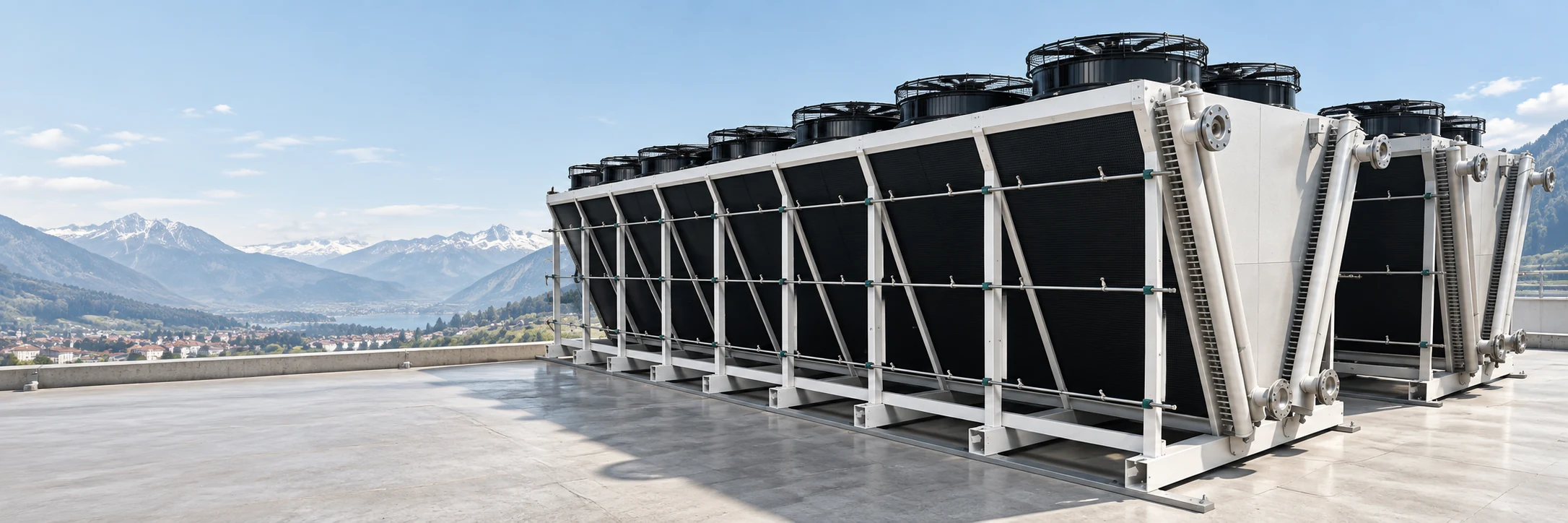
Adiabatic systems increase the performance of drycoolers or condensers during periods characterized by high ambient temperatures.

  • Cooling capacity
  • Water management
  • Precise control

How adiabatic cooling works

The operating principle uses water evaporation to reduce the air temperature before it enters the heat exchanger. The drycooler / condenser can therefore operate with an air temperature lower than the ambient temperature, increasing heat dissipation capacity and allowing the required operating conditions to be maintained even during the hottest periods.

Control, communication and supervision

Depending on the characteristics of the system and the required performance, spray systems or evaporative pad systems can be used.

Adiabatic technologies and strategies

1

Adiabatic spray systems

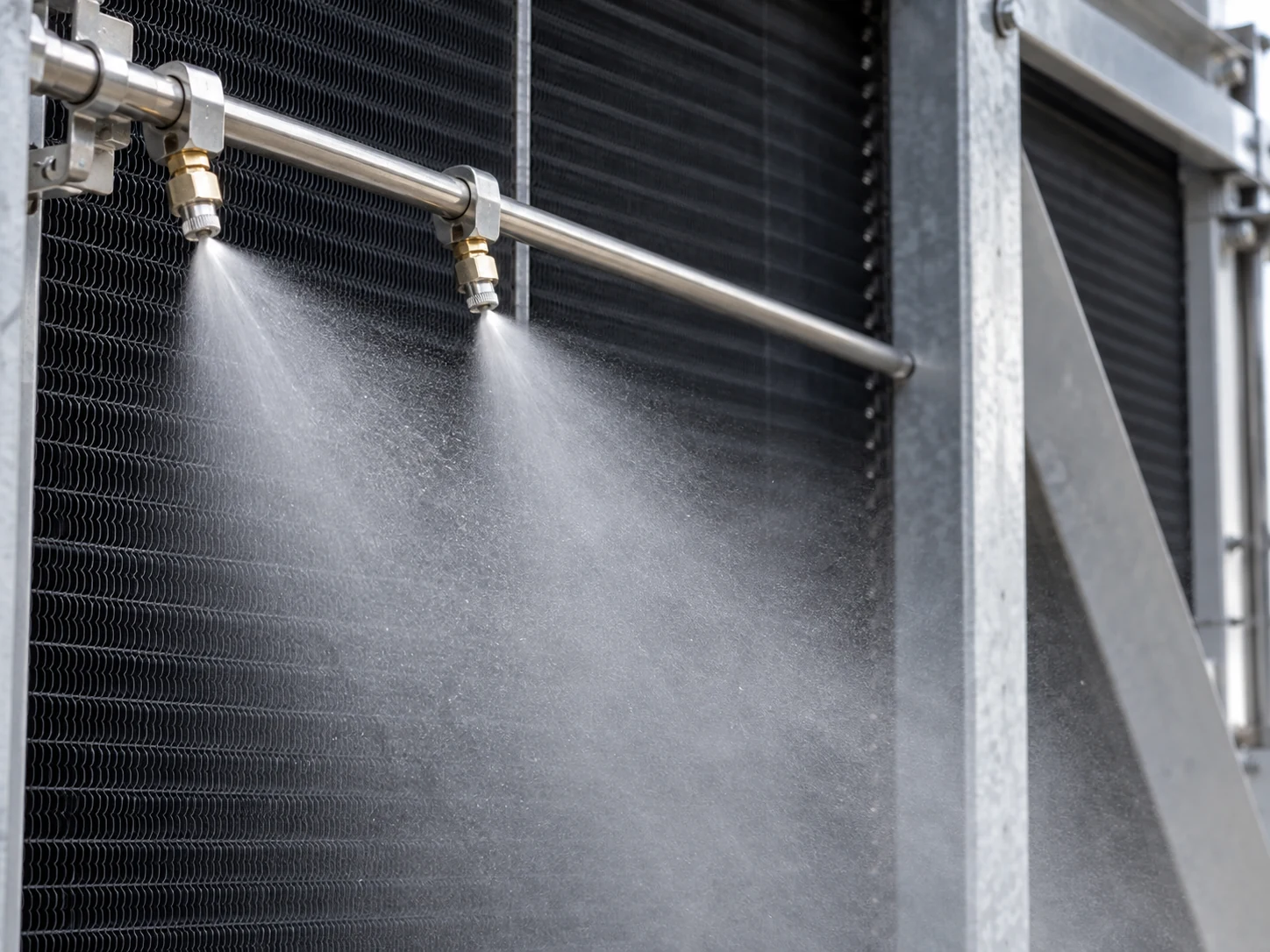
In spray systems, water is distributed through a series of nozzles installed near the air inlet of the drycooler or condenser.

Read more

As the water droplets evaporate, they absorb heat from the air and reduce its temperature before it passes through the heat exchanger.

Spray technology can be used to create simple ON/OFF systems or multi-stage solutions, adapting water usage to the actual operating conditions of the unit.

ON/OFF Spray

In the ON/OFF configuration, the adiabatic system is fully activated when operating conditions exceed a defined threshold.

The drycooler / condenser normally operates completely dry, and the spray system is activated only when the ambient temperature or cooling demand requires an increase in performance.

The simplicity of this control strategy makes this solution particularly suitable when the adiabatic system is mainly used to manage peaks in ambient temperature or thermal load.

Multi-Step Spray

In Multi-Step systems, the nozzles are divided into several independent groups that can be activated progressively.

The controller increases or decreases the number of active stages according to the operating conditions of the drycooler / condenser, allowing the amount of water used to be adapted to the actual cooling demand.

Compared with a purely ON/OFF control, this solution provides more gradual management of the adiabatic effect and greater optimization of water consumption, avoiding the use of the system's full capacity when it is not required.

2

Low-pressure spray systems

Low-pressure systems supply water to the nozzles at relatively low pressures, typically 3 bar.

Read more

They provide a simple and robust solution and can be used with either ON/OFF control or multi-stage management.

Droplet size is generally larger than in high-pressure systems, and part of the water reaches the heat exchanger surface, providing additional cooling.

For this type of application, water quality, materials and any surface treatments of the heat exchanger must be carefully evaluated.

They are particularly suitable when the adiabatic system needs to operate for relatively long periods and when a solution characterized by simple construction and low operating pressures is required.

3

High-pressure spray systems

In high-pressure systems, water is atomized through dedicated nozzles, producing extremely fine droplets.

Read more

Atomization promotes rapid evaporation of the water into the air drawn through the drycooler, reducing the air temperature before it reaches the heat exchanger.

Thanks to its high atomization capability, the system can achieve a significant pre-cooling effect using controlled quantities of water.

This technology is particularly suitable for temporarily increasing drycooler capacity during peaks in ambient temperature or thermal load.

Correct system design and control maximize the amount of water evaporated before it reaches the coil, limiting wetting of the heat exchanger.

High-pressure systems can also be managed in ON/OFF or Multi-Step mode, progressively adapting the atomization capacity to the system demand.

4

Adiabatic systems with evaporative pads

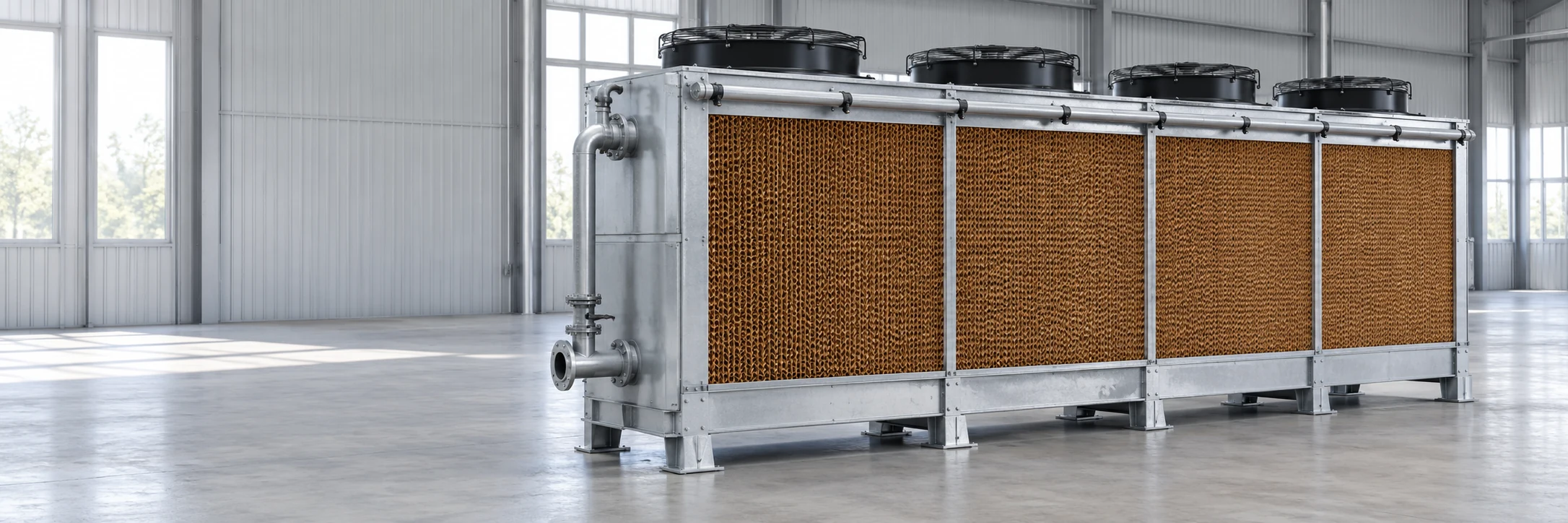
In systems with adiabatic pads, the air drawn into the drycooler passes through an evaporative surface that is kept uniformly wet.

Read more

As the air passes through the pad, part of the water evaporates, removing heat from the air and reducing its temperature before it enters the heat exchanger.

Unlike spray systems, the evaporation process takes place mainly within the pad: the air is therefore pre-cooled before reaching the coil without the need to spray water directly towards the heat exchanger.

The large surface area available for evaporation allows high levels of air saturation to be achieved and makes this technology particularly suitable for applications requiring frequent or prolonged use of adiabatic cooling.

Water distribution over the pad can be controlled according to operating conditions, while recovery and recirculation systems can be used to reuse non-evaporated water and further reduce consumption.

5

The most suitable solution for every application

There is no single adiabatic technology that is optimal for every application.

Read more

High-pressure spray systems are particularly effective for managing temperature and capacity peaks thanks to their high atomization capability.

Low-pressure spray systems provide a simple and robust solution and can be used for longer operating periods.

Multi-Step management progressively adapts water usage to actual demand, while an ON/OFF configuration represents the simplest solution when adiabatic cooling is used only when specific operating conditions are exceeded.

Evaporative pad systems are particularly suitable when frequent use of adiabatic cooling and a high level of air pre-cooling without direct wetting of the heat exchanger are required.

The selection and control of the system therefore make it possible to achieve the best compromise between cooling capacity, energy consumption, water consumption and drycooler operating conditions.

References