HVAC
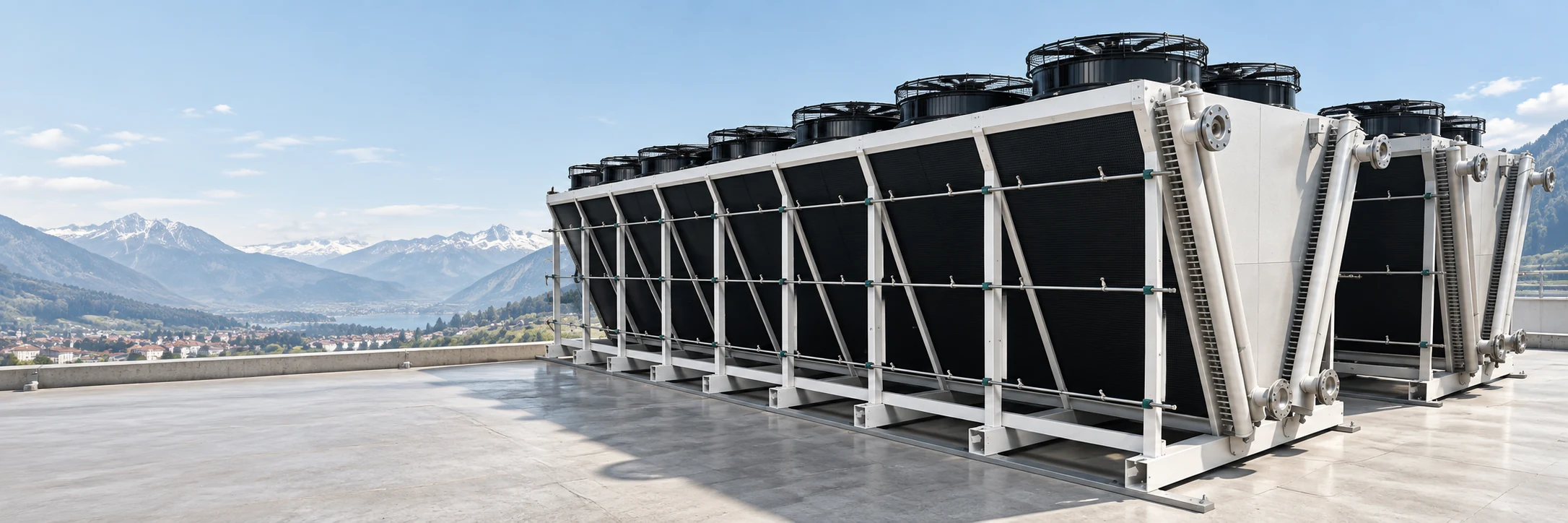
In the HVAC sector, drycoolers are used to dissipate heat generated by chillers, heat pumps, hydronic circuits and centralized air-conditioning systems.
One of the most interesting applications is free cooling. When the outdoor temperature is sufficiently low, the drycooler can be used instead of the chiller to cool the system fluid, providing significant energy savings.
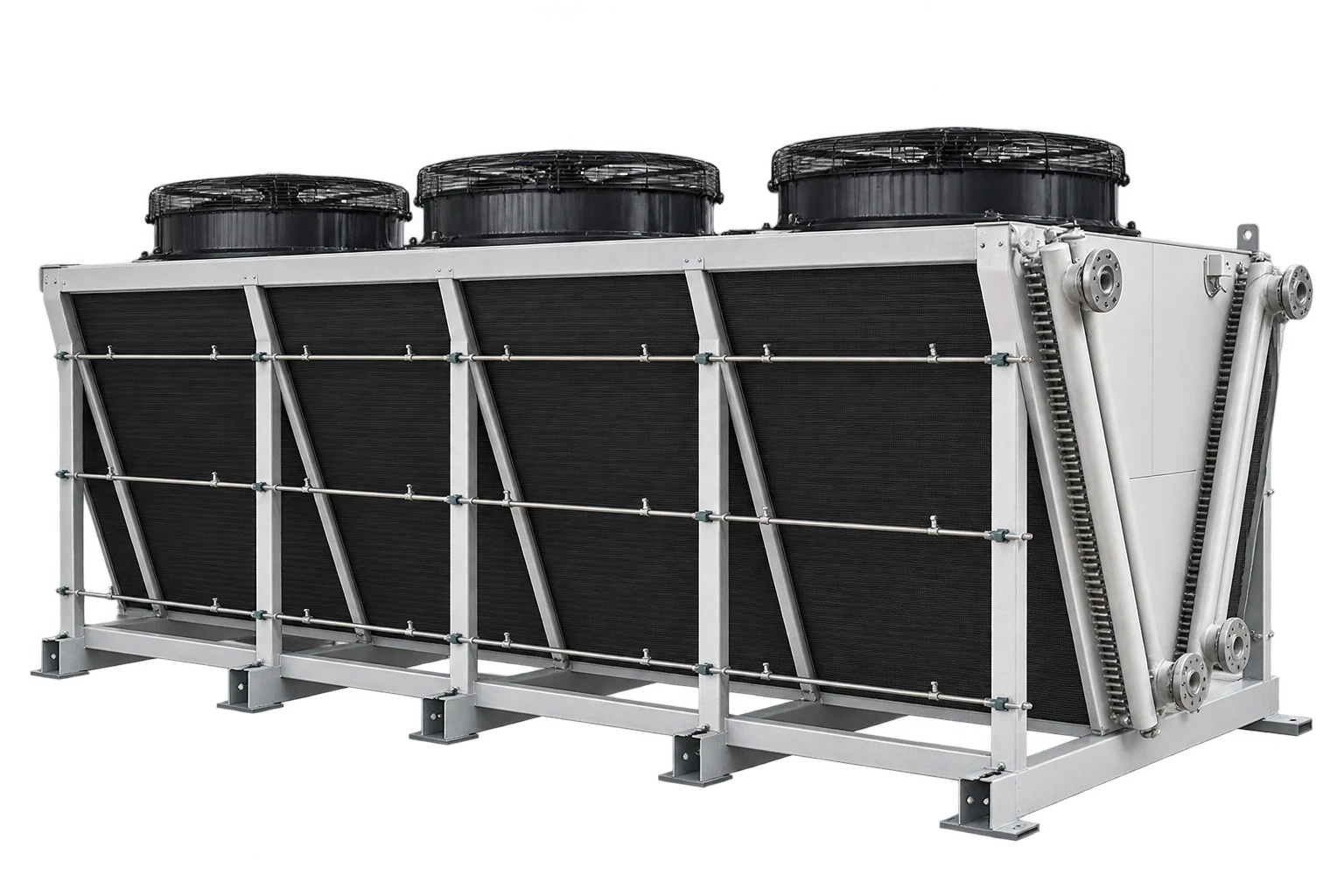
Continuous EC fan control makes it possible to precisely maintain the required temperature, avoiding discontinuous regulation and progressively adapting system capacity to climatic conditions.
During intermediate seasons, when the thermal load can vary rapidly, this modulation capability provides particularly efficient operation.
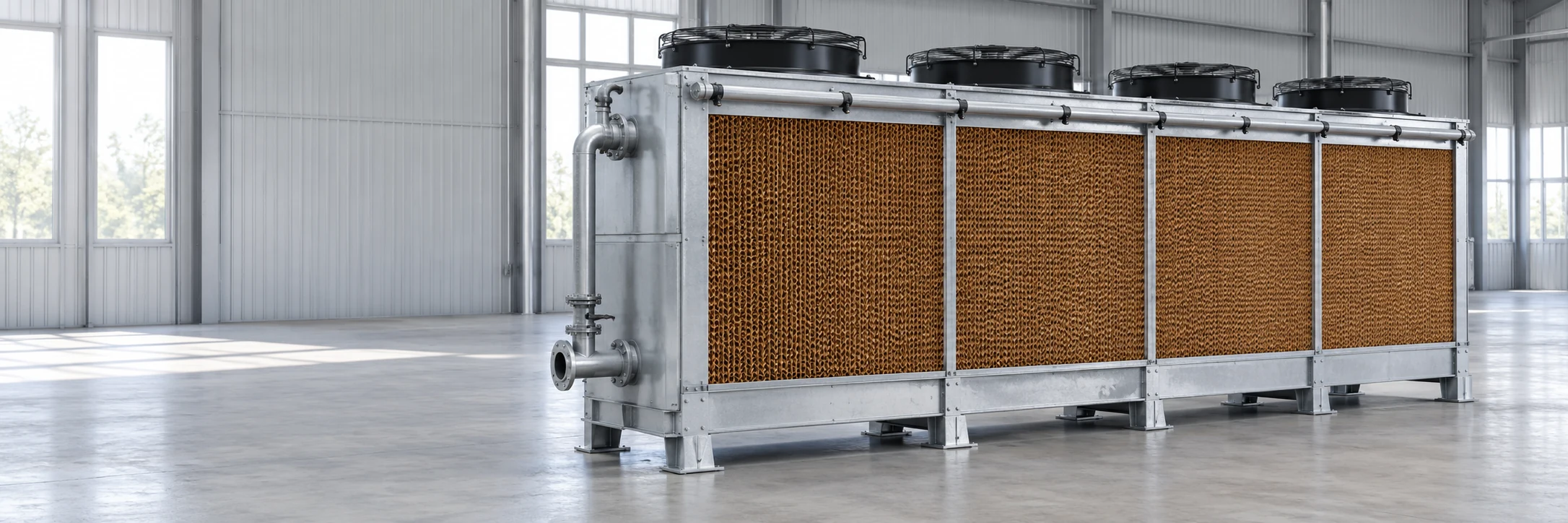
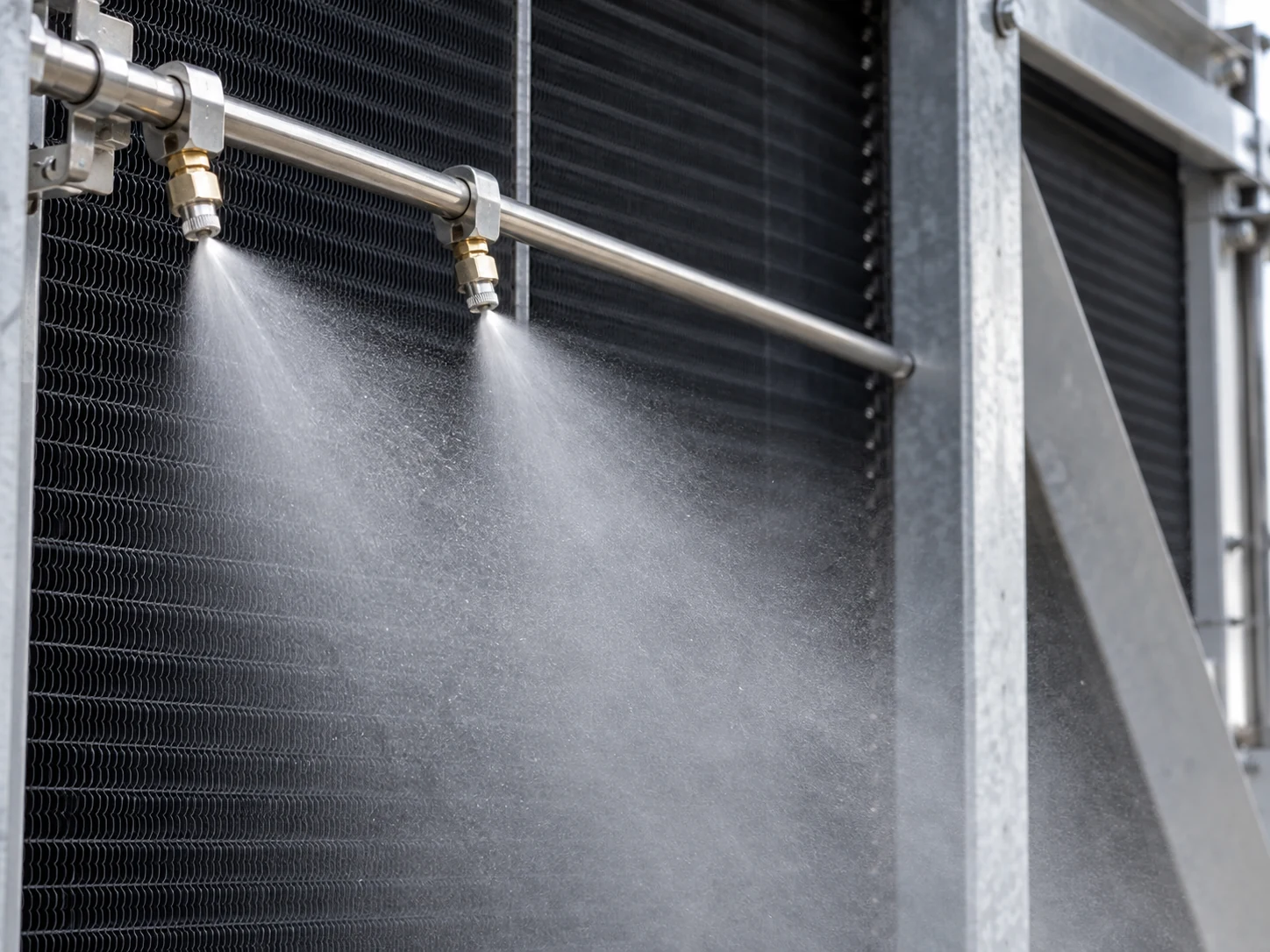
Integration with adiabatic systems also extends the drycooler's operating range during the hottest periods, increasing heat dissipation capacity only when required.
Data Center
In Data Centers, the cooling system must ensure operational continuity, energy efficiency and precise temperature control throughout the year.
The drycooler is particularly suitable for cooling circuits used by chillers, CDUs, liquid cooling systems and data room air-conditioning infrastructures.
EC fans allow heat dissipation capacity to be continuously adapted to the actual IT load and outdoor climatic conditions.
During colder hours or favorable seasons, the system can operate at reduced fan speeds or use free cooling strategies, significantly reducing the energy consumption of the cooling infrastructure.
Under more demanding climatic conditions, dry operation can be combined with adiabatic systems to temporarily reduce the temperature of the air entering the heat exchanger.
The combination of dry cooling, EC fans and modulating adiabatic cooling makes it possible to design systems that prioritize water-free operation for most of the year, using water only when environmental conditions require additional capacity.
The ability to monitor fans, temperatures, pressures, alarms and operating conditions also enables the implementation of redundant architectures and control systems that can be integrated with BMS and supervision platforms.
Power Generation
In the Power Generation sector, drycoolers are used to cool engines, generators, transformers, inverters, generator sets, cogeneration systems and numerous auxiliary circuits.
These applications are often characterized by high thermal loads and particularly demanding environmental conditions.
The use of EC fans allows the drycooler's capacity to adapt to different system operating conditions, limiting electrical consumption during partial-load operation while ensuring maximum capacity when the system operates at full load.
Independent or coordinated fan control also enables redundancy and operational continuity strategies.
In installations located in areas with high summer temperatures, the integration of an adiabatic system makes it possible to temporarily increase heat dissipation capacity without sizing the entire unit exclusively for the most extreme climatic conditions.
Industrial cooling
In industrial cooling, drycoolers can be used in a wide range of applications: machine tools, presses, compressors, furnaces, chemical plants, production processes, hydraulic circuits, treatment plants, power electronics systems and automated production lines.
The closed circuit keeps fluid quality under control and separates the process circuit from the external environment.
EC fan modulation makes it possible to maintain a stable process temperature even when the thermal load varies during the production cycle.
This helps prevent overcooling, reduce energy consumption and maintain more uniform operating conditions for the equipment.
For industrial applications characterized by significant seasonal variations, the system can operate mainly in dry mode and use adiabatic cooling only under the most demanding conditions.